
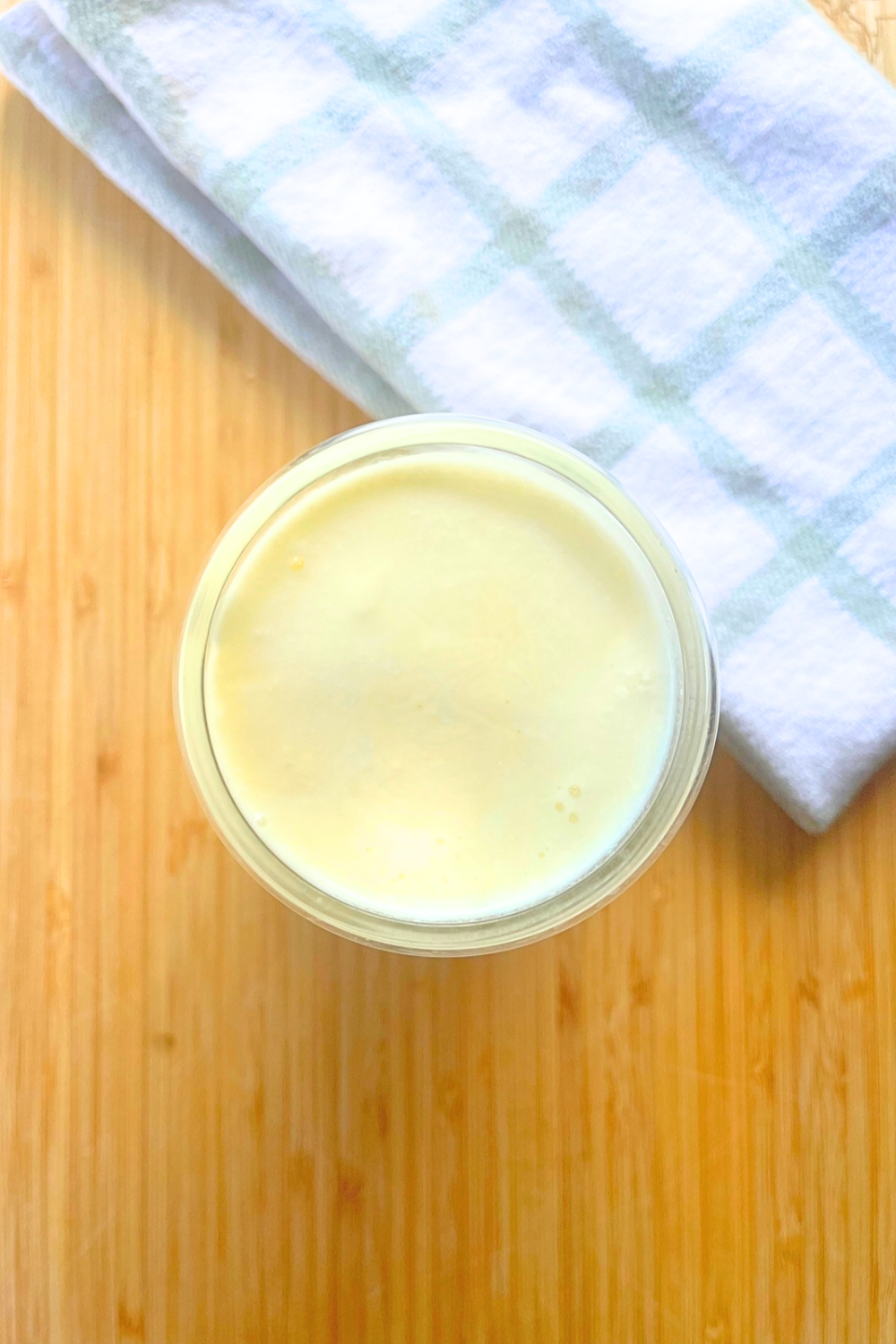
Raw milk kefir is FULL of amazing probiotics, enzymes and bioavailable nutrients. It is the perfect healthy snack to grab and drink on the go.
This post contains affiliate links, which means I make a small commission at no extra cost to you.
What is raw milk kefir?
Kefir is fermented milk. I promise it tastes much better than it sounds! Especially homemade raw milk kefir. Raw milk kefir is simply raw milk that has been fermented for about 12-24 hours and turns into a drinkable yogurt consistency filled with tons of probiotics. The length of fermentation time directly affects the taste of the kefir. So, longer fermentation equals more sour and yeasty taste.
Benefits of Raw Milk Kefir
Raw milk kefir is very nutrient dense and is incredible for gut health. The prebiotics feed and protect the good bacteria (probiotics) in the gut. It is also filled lots of bioavailable vitamins and minerals, antioxidants, naturally occurring enzymes and good probiotic bacteria, omega-3 fatty acids, and protein. Raw milk kefir can help improve digestion, immune system functionality, and potentially reduce inflammation.
Where can I find raw milk?
Some grocery stores offer raw milk in the organic section. You may also have a local farm that sells raw milk near you. Farmers markets are also a great place to look. Searching on realmilk.com or getrawmilk.com can help make the hunt for raw milk near you easier.
Where can I get milk kefir grains?
Personally, I bought my raw A2A2 milk kefir grains from a shop on Etsy. You can also buy milk kefir grains on culturesforhealth.com.
Maintaining Milk Kefir Grains
Similar to a sourdough starter, milk kefir grains need to be fed to be happy and healthy. I keep my milk grains active by always having a small batch of raw milk fermenting on my counter. I will strain the grains out every day or every other day and then put the grains into a new jar, add raw milk and repeat the process. After each batch, the grains will multiply so if you want to keep making the same amount of kefir each batch, discard some of the grains or share some with someone who wants to start making their own kefir so that you are maintaining about a 1 tablespoon of grains to 1 cup of milk ratio.
If you want to take a break from making kefir for a few days or slow down the process, you can store it in the fridge at anytime in the process for a few days, even just the grains by themselves. If you store the grains in the fridge by themselves, they will get “sleepy” and may take a couple small batches of kefir to get them really active again.
Ingredients
Raw Milk for the kefir base
Milk Grains to ferment the milk
Maple Syrup or Honey for sweetening if desired
Fruit for topping if desired
Tools You May Need
Mason Jars for fermenting milk and storing kefir
Strainer for straining the kefir from the kefir grains after fermentation
Bowl to strain the kefir into
FAQ
Can I use pasteurized milk?
Yes, you can. Keep in mind, that because a lot of the bioavailable nutrients and good bacteria (probiotics) are lost in the pasteurization process, you won’t be getting nearly as much benefit as raw milk.
Is kefir more beneficial than yogurt?
While both are amazing for your health, kefir may have more benefit because it does not get heated like yogurt does. The heating process, even at a low temperature, can destroy the heat-sensitive vitamins.
What is A2A2 milk?
A2A2 milk means that it contains only the A2 beta-casein protein. Many people have trouble digesting milk with A1 in it. This article explains the difference between the proteins and how research shows that the A1 is linked to health issues. All mammals produce A2A2 milk. We were not meant to consume any other type of milk.

Raw Milk Kefir
Ingredients
Method
- In a mason jar, put in 2 tbsp milk kefir grains and pour in 2 cups raw A2A2 milk.
- Place lid on top, but do not seal.
- Let it sit on your counter for about 12 to 24 hours depending on how thick and sour you want it.
- After 12 to 24 hours, pour the jar into a strainer to separate your kefir from the grains. Use a spoon to stir it around and strain faster since it will be thick.
- Save the grains and put them in a new jar to repeat the process for a new batch.
- Enjoy your homemade probiotic kefir by itself, with maple syrup or honey, or in a smoothie!
Notes
PIN TO SAVE FOR LATER

More from Old Fashioned Homestead

Healthy Sugar-Free Raspberry Cream Pie
Make the perfect guilt-free summer dessert using real, nourishing ingredients. This yummy cream pie recipe…

Raspberry Lime Probiotic Soda
Make your own healthy, probiotic fruit soda at home with real ingredients. Regular fruit soda…

Sourdough Einkorn Fresh Rhubarb & Ginger Muffins
These sourdough einkorn muffins made with fresh rhubarb and ginger may just be my favorite…

Probiotic Ginger Beer
One of my favorite drinks is ginger beer, but not the kind you may be…

Make Your Own Ginger Bug for Healthy Sodas
Did you know you can make your own healthy probiotic soda? All you need is…

Fresh Mint Chocolate Chip Ice Cream
Turn the fresh mint in your garden into this insanely delicious and super healthy mint…