
Do you ever wish you could eat delicious bread, pizza, cookies, muffins and even cake without feeling sluggish, bloated or inflamed? Or, wonder why so many people have issues with wheat and gluten when even the Bible talks about eating bread? Heck, even Jesus compares himself to bread. Is it possible for bread and baked goods to be good for you?
I have definitely wrestled with those questions for a long time until I came across the world of fresh milled flour. With fresh milled flour gaining popularity, there is a TON of information out there but I wanted to put together something that simplifies this topic and still answers all your questions. In this post, I will go over what exactly fresh milled flour is, share a brief history of flour, the rise of related health conditions, and go over why fresh milled flour can actually be healthy.
Disclaimers: I am not a doctor or expert. Everything I am sharing is purely from my own personal experience and research. This post may contain affiliate links which mean I make a small commission at no extra cost to you.
What Does Fresh Milled Flour Mean?
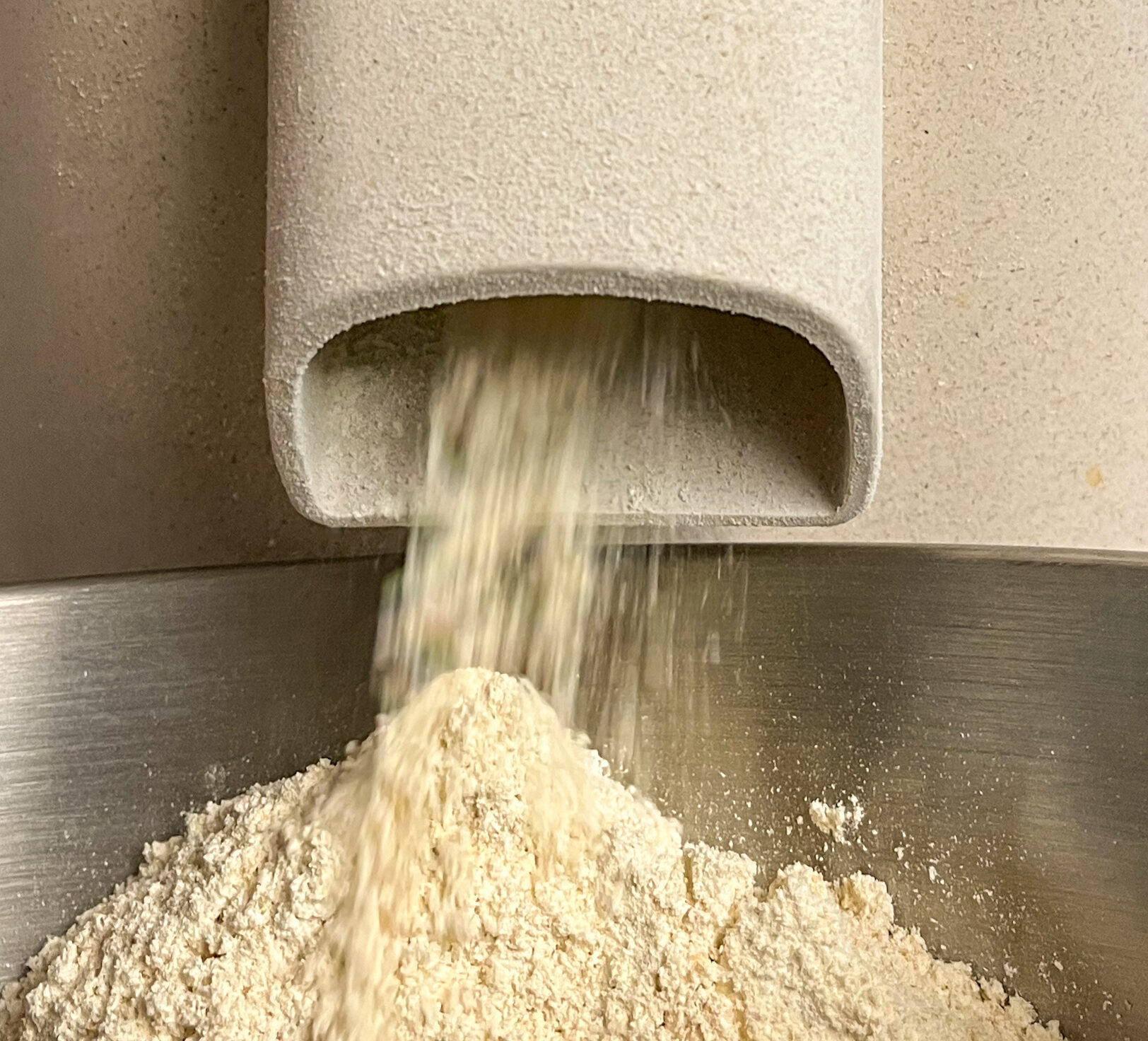
Simply put, fresh milled flour is when the grains are ground, or milled, shortly before using in recipes without any of the processing that all store bought flour goes through. Fresh milled flour is true whole grain flour because it has all of the parts of the grain still present.
Basic Anatomy of a Grain

Bran
This is the hard outer shell that protects the grain berry and contains fiber, B vitamins and antioxidants.
Endosperm
This is the starchy middle part of the grain. It has the least amount of nutrients in the grain compared to the bran and germ.
Germ
This is the innermost and most nutrient dense part of the grain. It contains protein, B vitamins, vitamin E, healthy fats and minerals.

Fresh Milled Flour versus Store Bought Flour
As soon as you break up a grain kernel, it starts oxidizing and losing nutrients. Because flour from the store needs to be able to sit on the shelf for awhile, it is sifted. Sifted flour is missing most of the bioavailable nutrients found in grains which is why it can sit on the shelf for months and months. There is no such thing as 100% whole grain flour that has been sitting on the shelf for months or even just days because parts of the grain are lost during the sifting process. True whole grain flour, or fresh milled flour, would not last more than a day or two on the shelf. The longer it sits, the more nutrients are lost. I mill my grains in my Mockmill just moments before using to get the most nutrients and optimal freshness. Bread from the store is high in sugar, low in fiber and bioavailable nutrients which leaves our bodies unsatisfied and actually craving more.
Important Definitions to Know
Sifted Flour
The sifting process removes any lumps and makes the flour lighter and fluffier. The bran and the germ are the coarser parts of the grain so they are lost during the sifting process which means that almost all of the nutrients are gone making the flour primarily a starchy carbohydrate.
Enriched/Fortified Flour
Because so many nutrients are lost, most of the flour on the shelves has been enriched meaning that synthetic vitamins and minerals have been added to the flour in efforts to replace the lost nutrients. Folic acid is also fortified into the flour.
Folate and folic acid are both forms of vitamin B9. While folic acid is a 100% man-made synthetic form of B9, folate is the naturally occurring form found in real, unprocessed and unfortified foods. More and more research is coming out showing the dangers of synthetic vitamins and folic acid to human health. Gary Brecka, a human biologist, explains the dangers of folic acid and the importance of real folate really well here.
Bleached/Unbleached Flour
As this article explains, bleached and unbleached flour is white flour that only has the endosperm present. Unbleached flour is white flour that sits for a certain amount of time oxidizing and whitening. Bleached flour is white flour that has been treated with chemicals to speed up this process. The white flour has become popular due to the lighter color and texture and the better rise it produces in baked goods.
Brief History of Flour
Nature’s First Wheat and Ancient Grains
The oldest known wheat, tracing back to around 7500 BC, is einkorn. It is also known as “man’s first wheat”. This article on einkorn.com explains einkorn’s history and origin in further detail. It also explains its difference from modern wheat. Einkorn has 14 chromosomes while modern wheat has 42. Einkorn also has much more protein and antioxidants than modern wheat. A few other popular ancient grains that have remained unchanged for hundreds and thousands of years include spelt, emmer and khorasan.
Milling, Sifting and Rise of Health Conditions
People started milling flour about 10,000 years ago using stones in their own homes. The milling industry is believed to have begun around 170 BC in Rome. Rome used animals and slaves to move the wheels grinding the grains according to this article. As Sue Becker, a food scientist and fresh milled flour baker, explains in this informative podcast episode, before the 1900s most families milled their own flour in the home and made their own bread until big steel rolling mills were invented that milled the grains and then sifted the flour into white starchy flour that can sit on the shelf for a very long time. This mass-produced sifted white flour quickly became popular for its convenience and light texture.
Prior to the steel mills mass producing sifted white flour, only the wealthy ate lighter colored baked goods made with white, sifted, smooth flour while the poor ate darker colored, coarser, whole grain baked goods. Becker also shares that in her studies she found that three epidemic diseases emerged shortly after the steel mills started their mass production of sifted white flour. The diseases are:
- Beriberi: a vitamin B1 deficiency affecting the nervous system and the cardiovascular system
- Pellagra: a vitamin B3 deficiency characterized by “four Ds”
- Dermatitis: skin lesions
- Dysentery: inflammation of the GI tract causing symptoms such as cramps and severe diarrhea
- Dementia: neuralogical issues such as memory loss, confusion and hallucinations
- Death
- Anemia: deficiency of red blood cells or hemoglobin
Becker goes on and explains that eventually the disease epidemics where traced back to the missing nutrients from the bran and germ that were no longer in the flour. This then led to the government basically mandating the flour mills to “fix” the flour by enriching and fortifying the flour with synthetic vitamins and minerals. It is not mandated anymore today but still remains very popular. This supposedly took care of the epidemic diseases but there are still many nervous and cardiovascular system disorders, GI tract issues and anemia issues today. Could those be related to the important bioavailable nutrients still missing from our ultra processed flour?
What does the Bible say?
Bread is talked about a lot in the Bible literally and symbolically. In John 6, for example, Jesus miraculously feeds 5,000 people using five small barley loaves and two fish. In this chapter, Jesus also speaks highly of bread and said, “For the bread of God is the bread that comes down from heaven and gives life to the world.” Jesus goes on and identifies himself with bread saying, “I am the bread of life”.
As mentioned previously, for most of history white flour and lighter colored baked goods were reserved for the wealthy while darker colored, unsifted baked goods were for the poor. Proverbs 23:1-3 warns us about the food at the royal table, “When you sit to dine with a ruler, note well what is before you, and put a knife to your throat if you are given to gluttony. Do not crave his delicacies, for that food is deceptive”.
Throughout the Bible, bread seems to symbolize various things such as nourishment, Jesus Christ and fellowship.
So, is fresh milled flour good for you?!
Research, history and even the Bible seem to say YES! And it makes sense. Fresh milled flour is not processed. It is a real, whole food that our ancestors used and it is the natural way of using wheat that God intended. When you are using freshly milled flour that hasn’t been sifted, enriched or bleached, you are using true whole grain flour that has all of the naturally occurring nutrients in the biological form that our bodies expect.
Once my husband and I switched to milling all of our own flour and baking all of our bread products, we stopped feeling bloated, sluggish or crampy after eating baked goods! We also noticed that the breads and baked treats from the store and most restaurants we used to love no longer tasted good to us anymore.
How to Get Started Using Fresh Milled Flour
Getting Your Own Grain Mill
Thankfully, milling your own flour today is much easier and quicker than it was for most of history thanks to modern technologies. There are many different home grain mill options with a wide price range. Here are a few options to look into:
This manual grain mill is a good affordable option that doesn’t rely on electricity.
Nutrimill has several budget-friendly electric grain mills that sit on your counter.
Mockmill also has great countertop electric grain mills that are generally a little more expensive. I personally use and love the Mockmill 200.
Buying Grains
Try to seek out grains that have not been sprayed with pesticides and chemicals. I am a big fan of Grand Teton Ancient Grains. They are a family-owned and operated farm and mill in Idaho that use organic, regenerative farming practices. Azure Standard is another great resource.
Using Fresh Milled Flour in Recipes
There is a learning curve when dealing with fresh milled flour, especially fresh milled ancient grains. While some recipes will allow you to substitute regular all purpose flour with fresh milled flour 1:1, many recipes will need some tweaking. Fresh milled baked goods are usually a little denser than those with all purpose white flour. It can be easy to add too much fresh milled flour to your recipes as doughs with fresh milled are a little more wet. The wet dough can be tricky to work with as it is also more sticky. Sticky, wet dough doesn’t always mean it needs more flour. Giving your dough time to sit and absorb the liquid has worked very well in my experience. If you add too much flour, it will result in an even more dense product.
Don’t let this intimidate you or hold you back! Even if something doesn’t quite turn out how you like, chances are it still tastes incredible. Experience and practice is the best teacher to don’t be afraid to play around with different recipes and adjustments! I promise, your tastebuds and health will thank you.
You can check out my fresh milled flour recipe index here for some easy, healthy recipe ideas using fresh milled ancient grains.
FAQ
How do I store my grains and my fresh milled flour?
Grains stored properly can last years and years! They just need to be stored in an airtight container in a cool, dark place. I store mine in Mylar bags in food-grade buckets with oxygen absorbers. If you have any leftover fresh milled flour after using it in a recipe, you can use it to feed your sourdough starter or put it in an airtight container and store in the freezer for a couple months.
Is store bought all purpose einkorn flour good for you?
Dr. Axe explains in this article that AP (all purpose) einkorn flour is much better than other processed flours. But, it is still sifted so that it doesn’t spoil meaning that the bran and the germ are gone. So, you might be getting more nutrients than regular white flour but you are still missing the majority of the bioavailable nutrients found in einkorn.
More from Old Fashioned Homestead

Healthy Sugar-Free Raspberry Cream Pie
Make the perfect guilt-free summer dessert using real, nourishing ingredients. This yummy cream pie recipe…

Raspberry Lime Probiotic Soda
Make your own healthy, probiotic fruit soda at home with real ingredients. Regular fruit soda…

Sourdough Einkorn Fresh Rhubarb & Ginger Muffins
These sourdough einkorn muffins made with fresh rhubarb and ginger may just be my favorite…

Probiotic Ginger Beer
One of my favorite drinks is ginger beer, but not the kind you may be…

Make Your Own Ginger Bug for Healthy Sodas
Did you know you can make your own healthy probiotic soda? All you need is…

Fresh Mint Chocolate Chip Ice Cream
Turn the fresh mint in your garden into this insanely delicious and super healthy mint…